
Ever feel irritable and cry easily two weeks before your period? You might wonder if you’re just being too sensitive or if something’s really wrong. This feeling is common, and it can be confusing when it seems like you might have a mood disorder.
Here’s the truth: if your mood swings follow your menstrual cycle and go away when you start your period, it’s likely PMDD. But if you also have unpredictable mood swings that aren’t tied to your cycle, you might have bipolar disorder. Knowing the difference is important because the treatments and risks are different.
Hormonal changes during your cycle can trigger mood swings in some people. This is because of how these changes affect your brain’s chemistry and stress response. Studies show PMDD affects 3–8% of women, while bipolar disorder affects about 2.8% of people in the U.S. at some point in their lives. It’s not uncommon for both conditions to happen together, and doctors might miss the diagnosis if they don’t pay close attention to when symptoms happen.
This guide, reviewed by Dr. Helloyze Ferreira Ancelmo, will help you understand how to tell PMDD and bipolar disorder apart. You’ll learn what to ask your doctor and when to see a specialist. This way, you can get the right treatment for your symptoms.
Key Takeaways
- PMDD symptoms are cyclical and tied to the luteal phase; bipolar symptoms occur independently of your cycle.
- Tracking mood daily for at least two cycles is essential for accurate diagnosis.
- PMDD and bipolar disorder can co-occur; careful assessment reduces misdiagnosis.
- Evidence-based treatments differ: antidepressants and hormonal options often help PMDD; mood stabilizers and antipsychotics are common for bipolar disorder.
- Consult a clinician experienced in women’s mental health when symptoms impair daily life.
Quick Answer
Both conditions can cause mood swings, but they happen in different ways. PMDD symptoms start in the luteal phase and get better after the period. Bipolar disorder, on the other hand, has distinct mood episodes like mania or depression that don’t follow the menstrual cycle.
It can be tricky to tell them apart. Studies show some women with bipolar disorder also experience symptoms before their period. So, understanding the difference between PMDD and bipolar disorder is key for proper treatment.
Other symptoms like anxiety or obsessive thoughts can make it even harder. It’s possible to have both conditions. Doctors look for signs of hypomania and mood changes outside of the premenstrual phase to figure out the difference.
To get a correct diagnosis, you need to track your symptoms over two menstrual cycles. You also need a detailed history of your mental health. Working together with your gynecologist and mental health provider is important. This way, you avoid misdiagnosis and get the right treatment.
Key Takeaways
Start by looking at when symptoms happen. PMDD symptoms show up in the luteal phase of your cycle. Bipolar mood swings, on the other hand, don’t follow a cycle. Keeping a symptom journal can help you see this pattern and avoid mistaking it for a mood disorder.
For a PMDD diagnosis, track your symptoms for two full cycles. You can use apps like Clue or Flo, or keep a paper diary. Tools like the Daily Record of Severity of Problems can also help. If your symptoms are consistent and really affect your life, you might get a provisional diagnosis.
Before starting treatment, check for signs of mania or hypomania. If you’ve had mood swings before, you might need mood stabilizers or antipsychotics. This is to prevent making things worse.
If you think you might have both PMDD and bipolar, focus on stabilizing your mood first. Treating bipolar disorder first helps avoid triggering mania when you start SSRIs or hormonal treatments for PMDD symptoms.
Choose treatments based on your diagnosis. For PMDD, SSRIs and certain hormones like birth control might help. Bipolar disorder usually needs mood stabilizers like lithium or valproate, and sometimes antipsychotics.
Don’t forget to check for other issues like anxiety or obsessive-compulsive symptoms. Working with a psychiatrist and gynecologist can help manage these issues, too.
Use tools like the Mood Disorder Questionnaire and mood charts to help make decisions. If you need more help, consider seeing a reproductive psychiatrist or getting a team consultation. This can help refine your diagnosis and treatment plan.
For a side-by-side comparison, check out this resource: PMDD vs perimenopause comparison. These tips and the women’s mental health points above will help you understand your mood symptoms better and make informed choices.
What Is PMDD?

Ever wondered about PMDD and how it’s different from regular premenstrual symptoms? PMDD is a serious condition recognized by the DSM-5. It causes severe emotional, cognitive, and physical symptoms in the luteal phase after ovulation. These symptoms go away a few days after your period starts.
Common symptoms of PMDD include mood swings, irritability, and feeling persistently sad. You might also feel anxious, tired, or have trouble sleeping. Other signs are changes in appetite, breast tenderness, bloating, and being more sensitive to sounds and smells.
To be diagnosed, you need to track your symptoms daily for two cycles. Tools like the Daily Record of Severity of Problems help confirm these symptoms. Your doctor will check if these symptoms are severe enough to affect your daily life.
Studies suggest that some people are more sensitive to hormonal changes than others. This sensitivity might affect how some people develop PMDD. It’s not about abnormal hormone levels, but how the body reacts to them.
PMDD affects 3–8% of menstruating people. It often happens alongside mood and anxiety disorders. For more information on managing PMDD, check out this comprehensive guide to premenstrual care.
There are many ways to manage PMDD, from lifestyle changes to medication. Some antidepressants can be taken only during the luteal phase. For severe cases, hormonal treatments or supplements might be recommended. Tailored therapy can also help reduce symptoms.
When you read about PMDD and bipolar disorder, remember they share some symptoms. Accurate tracking and talking to a doctor are key to diagnosing PMDD correctly. This ensures you get the right treatment.
What Is Bipolar Disorder?

Ever wondered about bipolar disorder and how it’s different from premenstrual mood swings? Bipolar disorder is a mood disorder that lasts a lifetime. It has episodes of feeling very high and episodes of feeling very low.
Doctors use the DSM-5 to define these episodes. This helps them tell if you’re having a mood episode or just a normal day. They look at how long and how severe these episodes are.
Mania lasts at least a week or longer if you need to be in the hospital. Hypomania must last four days or more. Major depression episodes last two weeks or more. These rules help doctors know if you’re having a mood disorder or something else.
Knowing about bipolar disorder and pmdd is important for women who notice mood changes. Hormones can affect how symptoms show up during different times of the month, pregnancy, and menopause. Always talk to your doctor about these changes.
Bipolar I
Bipolar I means you’ve had at least one manic episode. Mania makes you feel very high or irritable. You might feel like you can do anything, sleep less, talk a lot, and take risks.
Doctors usually treat bipolar I with mood stabilizers like lithium or valproate. They might also use atypical antipsychotics. Therapy helps you cope and stick to your treatment plan. If you need antidepressants, they’re only used with a mood stabilizer to avoid mania.
Bipolar II
Bipolar II means you’ve had at least one hypomanic episode and one major depressive episode. Hypomania is less severe than mania. It doesn’t cause major problems or psychosis, and it’s a clear change from your usual mood.
Many people with bipolar II are misdiagnosed as having unipolar depression. This is because hypomania can be hard to spot. Using antidepressants alone can make mood swings worse. Treatment focuses on mood stabilizers and therapies like cognitive behavioral therapy or interpersonal and social rhythm therapy.
If you want a quick guide on how doctors diagnose, check out this summary on DSM-5 usage in psychiatry at DSM-5 diagnostic guidance. It explains how doctors can tell depression from mania and hypomania for better care.
PMDD vs Bipolar Disorder Comparison Table
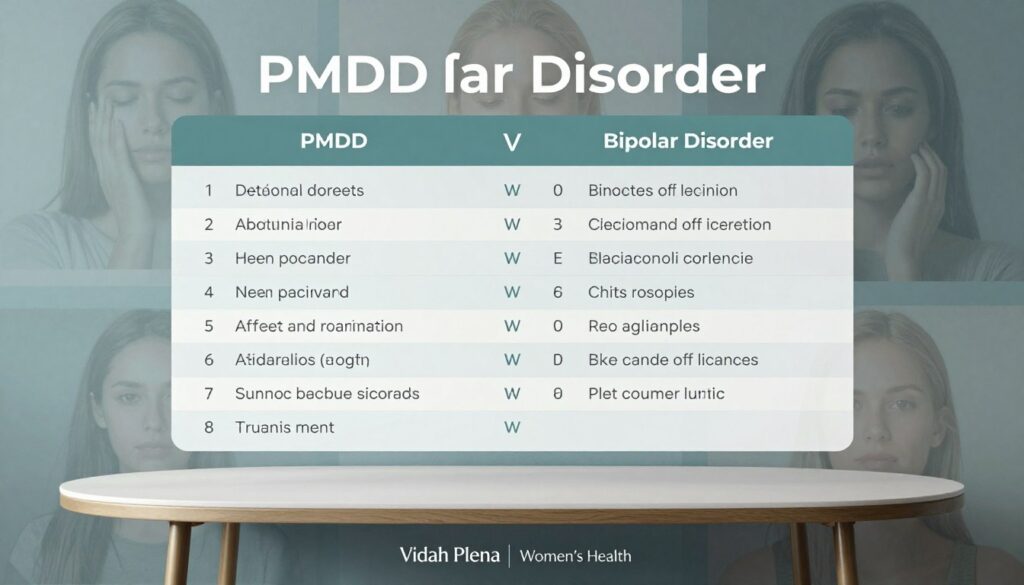
This comparison helps you talk to your doctor. The table below shows differences in timing, mood, diagnosis, treatment, safety, and common health issues. It helps spot important patterns in your health.
| Domain | PMDD | Bipolar Disorder |
|---|---|---|
| Timing / Pattern | Symptoms happen in the luteal phase and stop soon after your period starts. The cycle pattern is key to diagnosing PMDD. | Mood episodes happen without a set cycle. They can be short or long and don’t follow a monthly pattern. |
| Core Mood Features | You might feel irritable, have big mood swings, anxiety, and sadness before your period. Physical symptoms often go with these feelings. | Mania or hypomania (feeling too good) and major depression are part of bipolar episodes. Mixed states can include agitation and thoughts of suicide. |
| Duration | Symptoms last about 1–2 weeks each cycle and go away after your period starts. | Episodes can last from days to months. Mania lasts at least a few days; depression can last weeks to months without treatment. |
| Diagnostic Tools | Daily charts, the DRSP, and a clear luteal-phase pattern help diagnose PMDD. | A structured interview, Mood Disorder Questionnaire (MDQ), and documented mania or hypomania are key for bipolar diagnosis. |
| Treatment Strategies | SSRIs with luteal dosing or continuous dosing, hormonal options like birth control, and CBT for cyclical symptoms are used for PMDD. | Mood stabilizers, atypical antipsychotics, and psychotherapy like CBT or IPSRT are used for bipolar. Treatment must consider pregnancy and reproductive health. |
| Risk and Safety | There’s a high risk of self-harm in severe cases, often in the luteal phase. Safety planning is critical. | There’s a higher suicide risk, mainly during depressive and mixed states. Close monitoring and crisis planning are essential. |
| Comorbidity | PMDD often occurs with anxiety disorders, OCD, and mood disorders. Symptoms can also be like major depressive disorder. | Bipolar disorder often happens with anxiety, substance use disorders, and medical conditions. Co-occurring PMDD can make diagnosis and treatment harder. |
| Clinical Note | Tracking symptoms across at least two cycles helps accurately diagnose PMDD and bipolar disorder. | A detailed mood history and family history of bipolar disorder help diagnose. Be careful when using antidepressants to avoid switching. |
This tool is meant to help your doctor’s assessment. Use the table to prepare for your appointment. It’s good for tracking symptoms, their severity, and treatment history.
If you think you might have both conditions, bring your cycle charts and a detailed symptom timeline. Clear documentation helps your doctor understand your health better.
Key Differences in Symptoms
It’s hard to tell PMDD from bipolar because they share symptoms like irritability and low mood. Look for a pattern tied to your period or clear episodes of mania or hypomania to figure out what you have.
Timing of Symptoms
PMDD symptoms start in the luteal phase, about 7–10 days before your period. They peak before your period and get better soon after. This pattern should happen in at least two cycles.
Bipolar mood changes don’t follow the menstrual cycle. They come in episodes of mania, hypomania, or depression that last weeks to months. Some people with bipolar might feel worse before their period, but that doesn’t mean they have PMDD unless the timing and criteria match.
Keep a daily symptom diary and a menstrual calendar. Use tools like the DRSP to track symptoms. Bring these charts to your doctor’s appointments so they can see the patterns and tell PMDD from bipolar.
Mood Episodes
PMDD doesn’t include true manic or hypomanic episodes. You might feel very irritable or angry, but you won’t have the grandiosity or risky behaviors of mania.
Bipolar disorder is marked by mania or hypomania and depressive episodes. Look for past times of increased energy, decreased sleep needs, or risky choices when checking for bipolar mood episodes.
Be aware of mixed features and rapid cycling. If your mood swings more than four times a year, it might be rapid cycling bipolar. Your doctor will check for medication effects or hormonal contributors.
Both PMDD and bipolar can include anxiety, panic, or obsessive symptoms. PMDD often has transient increases tied to the luteal phase. Bipolar disorder might have a long-standing anxiety disorder that needs separate treatment. For more on the differences, see this comparison on PMDD and bipolar disorder.
Can Someone Have Both Conditions?
Can someone have PMDD and bipolar at the same time? Studies show that people with bipolar disorder often experience premenstrual symptoms. Some of these people meet the full criteria for PMDD, showing a true overlap of both conditions.
Diagnosing both can be challenging. PMDD symptoms must go away after menstruation. If symptoms last all month, it might be bipolar disorder instead. Keeping a daily mood, sleep, and cycle log helps doctors make the right call.
When both conditions are suspected, treatment changes. First, focus on stabilizing mood to avoid mood swings. Starting an SSRI for PMDD without a mood stabilizer can trigger mania in bipolar patients.
Managing both conditions often requires a team effort. Psychiatrists and gynecologists work together. They start with mood stabilizers like lithium or lamotrigine. If symptoms persist, they might add an SSRI or discuss hormonal treatments.
Real-life examples show how history affects treatment. A 30-year-old with bipolar II notices worsening depression only in the luteal phase. This suggests PMDD and bipolar together, leading to targeted treatments. A 28-year-old with PMDD later shows signs of hypomania, requiring a shift to mood stabilization.
When both conditions exist, careful monitoring is key. Risks include suicide, drug interactions, and mood swings. Expect regular medication adjustments, safety plans, and cycle tracking.
Remember, each woman’s case is unique. Use structured tracking, team care, and clear communication with your doctors. This way, you can find the safest and most effective treatment plan for you.
Treatment Considerations
Managing mood symptoms from both bipolar disorder and PMDD requires a personalized approach. First, focus on stabilizing bipolar episodes. Then, address PMDD symptoms. Your treatment team might include a psychiatrist, gynecologist, and therapist.
Medication
Choosing the right medication depends on the main condition. For bipolar disorder, mood stabilizers like lithium and valproate are key. Antipsychotics such as quetiapine help with depression or mixed phases.
For PMDD, SSRIs like fluoxetine are often the first choice. You might take them all month or just during the luteal phase. Hormonal treatments, like birth control pills, are also options.
When treating both conditions, start with mood stabilizers. Be careful when adding SSRIs for PMDD. Talk about pregnancy plans, as lithium and valproate need careful management.
- Supplements like calcium and chasteberry may help, but check with your doctor first.
- Regular lab tests and visits are important for monitoring medication.
Therapy
Psychotherapy is beneficial for both conditions. For PMDD, therapy helps manage symptoms and improve coping. Mindfulness can also help.
For bipolar disorder, therapies like CBT and IPSRT help prevent relapse. They focus on sleep, routines, and social rhythms.
Combining medication with therapy is the best approach. This includes managing triggers and using specific strategies for bipolar disorder. Simple steps like regular sleep and exercise can also help.
| Focus | Primary Treatments | Monitoring and Notes |
|---|---|---|
| Acute bipolar stabilization | Lithium, valproate, carbamazepine, lamotrigine, quetiapine, lurasidone | Labs for lithium (renal/thyroid) and valproate (liver/platelets); suicide risk safety plan |
| PMDD symptom control | SSRIs (fluoxetine, sertraline, paroxetine), COC with drospirenone, GnRH agonists | Consider luteal dosing; fertility and add-back therapy require gynecology input |
| Comorbid management | Prioritize mood stabilizer, cautious SSRI use, combined psychotherapy | Close monitoring for mood switching; pregnancy counseling and coordinated care |
| Adjunct strategies | CBT for PMDD, IPSRT, family-focused therapy, mindfulness, lifestyle changes | Symptom tracking, sleep hygiene, limit substances, gynecologic evaluation for pelvic symptoms |
When to Seek Medical Help
Your safety is the top priority. If you have suicidal thoughts, plans, or behaviors, seek urgent care. Also, if you have severe mania with psychosis, sudden bizarre behavior, or can’t care for yourself, get help right away. These are urgent signs that need immediate attention.
If symptoms are intense but not dangerous, contact your clinician quickly. You should seek help if new mood swings interfere with work, school, or relationships. Look for signs of hypomania or mania, like increased energy, less sleep, risky activities, or grandiose thinking.
Track your symptoms to understand them better. For PMDD, chart your symptoms for at least two menstrual cycles. Bring these records to your healthcare provider. For bipolar disorder, ask for a psychiatric history that includes past episodes and family history.
Decide who to see next. Primary care and gynecology can start a PMDD workup. For complex cases or when you need help with bipolar disorder and PMDD, see a psychiatrist. A team that includes a therapist and psychiatrist often works best.
Make your visits productive by preparing well. Bring charts, medication lists, a timeline of mood changes, and family history. Ask about treatment risks if you’re planning to get pregnant or are breastfeeding. Discuss safety plans and emergency contacts.
Use emergency resources if needed. In the United States, call 988 for the suicide and crisis lifeline or 911 for immediate danger. For more guidance and specialist referrals, check this resource on when to seek a psychiatrist: when to seek a psychiatrist.
| Concern | When to Act | Who to Contact |
|---|---|---|
| Suicidal thoughts or plans | Immediate | 911, 988, emergency department |
| Severe mania or psychosis | Immediate | Emergency services, psychiatrist |
| New cyclical severe mood symptoms | Within days to weeks | Primary care, gynecologist, psychiatrist |
| Suspected hypomania | Prompt evaluation | Psychiatrist |
| Medication concerns (pregnancy/breastfeeding) | Schedule soon | Psychiatrist with reproductive expertise |
| Ongoing functional decline | Prompt | Psychiatrist, therapist, collaborative team |
If you’re unsure when to seek help for PMDD and bipolar, it’s better to ask for a medical opinion. Early evaluation can lead to effective treatment and prevent long-term harm. If you need help with bipolar disorder and PMDD, reach out now to avoid worsening symptoms.
Evidence Summary
When trying to tell PMDD from bipolar disorder, use daily tracking. Studies show the Daily Record of Severity of Problems (DRSP) is key for PMDD. For bipolar, look at DSM-5 criteria and use structured interviews. Tools like the Mood Disorder Questionnaire can also help.
Research shows PMDD and bipolar have different causes. PMDD is linked to hormones and brain chemicals. Bipolar disorder has a strong genetic link and brain circuit changes.
Treatment studies help guide care. For PMDD, fluoxetine and sertraline are proven to work. Some birth control and GnRH agonists help too. For bipolar, lithium and atypical antipsychotics are effective.
Dealing with both PMDD and bipolar is tricky. There’s not much research on this. But, start by treating bipolar symptoms first. Use SSRIs carefully if needed.
There’s a lot we don’t know yet. We need more studies on treating both conditions together. We also need better research on treating women during different life stages.
Use the latest research to guide your care. Combine tracking, assessments, and proven treatments. Keep up with new findings in PMDD and bipolar research.
Final Thoughts
Remember, PMDD and bipolar disorder are different, even though they can seem similar. The main difference is PMDD’s link to the menstrual cycle and bipolar’s presence of hypomania or mania. Knowing this is important because the right treatment and safety plans vary.
For action, start tracking your symptoms and menstrual cycle if you think it’s PMDD. Keep a detailed record of any hypomanic or manic episodes. It’s also key to work closely with both your gynecologist and psychiatrist, which is even more important if you’re planning to get pregnant or are on certain medications.
Always prioritize your safety. If you’re feeling suicidal, get help right away and make sure to follow up closely when changing medications. For more help, check out Vidah Plena’s content on PMDD, treatment, supplements, and women’s mental health. This article was reviewed by Dr. Helloyze Ferreira Ancelmo (CRM-GO 31293); always talk to a licensed clinician for your specific needs.
This guide is full of helpful information but it’s not a substitute for medical advice. Use these tips to talk to your doctor and make sure your diagnosis and treatment plan are right for you. Always have a qualified healthcare professional overseeing your care.
FAQ
What is the main difference between PMDD and bipolar disorder?
PMDD symptoms happen in the week before your period and go away soon after. Bipolar disorder has mood episodes that last longer and aren’t tied to your period. To tell them apart, track your symptoms daily for two months.
Can you have both PMDD and bipolar disorder at the same time?
Yes, it’s possible. But, it’s important to know if your mood symptoms are from PMDD or bipolar. If your symptoms don’t go away with your period, you might not have PMDD. First, treat your bipolar disorder, then manage any PMDD symptoms.
How should you track symptoms to distinguish PMDD from bipolar disorder?
Track your symptoms every day for two months. Use tools like the Daily Record of Severity of Problems (DRSP) or simple charts. Note how severe your symptoms are, when they happen, and how they affect you. Show your charts to your doctor to help plan your treatment.
What medications treat PMDD and how do they differ from bipolar treatments?
PMDD is often treated with SSRIs or hormonal options. Bipolar disorder treatment focuses on mood stabilizers and atypical antipsychotics. If you have both, start with mood stabilizers before adding other medications.
Are there therapy options that help with PMDD and bipolar disorder?
Yes. CBT can help with PMDD symptoms. For bipolar disorder, therapies like CBT, IPSRT, and family-focused therapy can help prevent relapse. Combine these therapies with mood-stabilizing medications to manage symptoms.
How common is PMDD compared with bipolar disorder in women?
PMDD affects 3–8% of menstruating women. Bipolar disorder affects about 2.8% of the U.S. population. Many women with bipolar disorder experience symptoms before their period, but not all have PMDD. Accurate diagnosis is key.
Could SSRIs for PMDD cause problems if you have bipolar disorder?
Yes. SSRIs can trigger mania or hypomania in bipolar disorder without a mood stabilizer. Always start with mood stabilizers before SSRIs and watch for mood changes.
What role do hormones play in PMDD and bipolar symptoms?
Hormones, like progesterone, might play a role in PMDD. Hormonal treatments can help some women with PMDD. Hormonal changes can also affect bipolar disorder, so managing them is important.
How urgent is it to seek help for cyclical mood symptoms or suspected bipolar disorder?
Seek help right away if you have suicidal thoughts or severe mania. For new mood symptoms, see a doctor quickly. For PMDD, start tracking your symptoms and bring your charts to your doctor. For bipolar disorder, get a psychiatric evaluation.
What should your clinician consider when both PMDD and anxiety/OCD symptoms are present?
Anxiety disorders and OCD often happen with PMDD and bipolar disorder. Your doctor should look at symptom timing and severity. Treat all conditions together, avoiding medications that could worsen symptoms.
Are supplements or lifestyle changes effective for PMDD or bipolar disorder?
Lifestyle changes like regular sleep and exercise can help both conditions. Some supplements might help PMDD, but talk to your doctor first. For bipolar disorder, lifestyle changes and medication are key.
What tests or monitoring are needed if you start mood stabilizers or hormonal treatments?
Mood stabilizers need regular checks. Lithium requires kidney and thyroid function tests. Valproate needs liver and platelet monitoring. Hormonal treatments require gynecologic evaluation and side effect monitoring. Always update your doctor on your pregnancy plans.
Where can you find reliable resources and specialists for PMDD, bipolar disorder, and women’s mental health?
Look for care from primary care, gynecology, or psychiatry. For complex cases, reproductive psychiatry is best. Use Vidah Plena content and consult with specialists like Dr. Helloyze Ferreira Ancelmo for personalized advice.