

Have you ever felt your mood, sleep, or energy drop sharply before your period? It’s not just you, and you’re not alone. Many women feel angry, depressed, anxious, or extremely irritable in the week before their period. This pattern is often a sign of PMDD, making it hard to deal with daily life.
This guide offers a clear look at pmdd treatment and evidence-based options. It’s reviewed by Dr. Helloyze Ferreira Ancelmo, CRM-GO 31293. It covers diagnosis, why PMDD happens, and how to find the right treatment for you in the U.S. health system.
PMDD affects about 3–8% of menstruating women, often starting in your 20s. It can start in adolescence and get worse over time. It’s seen as a neuroendocrinological condition, where your brain is too sensitive to hormone changes.
Major risk factors include mood or anxiety disorders in your family or past, early-life trauma, and mood changes during hormonal transitions. Understanding these helps because PMDD is a big part of women’s mental health. Good treatment can really help.
In the next sections, you’ll find quick answers, key takeaways, and how to diagnose PMDD. You’ll also get a review of medical and natural treatments. There’s a comparison table, advice for different symptom levels, and when to seek urgent care. Links to more content on supplements, nutrition, and women’s mental health are also provided.
Key Takeaways
- PMDD is a treatable, cyclical disorder caused by sensitivity to normal hormonal changes.
- Evidence based pmdd treatment includes SSRIs, hormonal options, and individualized combination plans.
- Risk factors include prior mood disorders, family history, and stress or trauma.
- Accurate diagnosis requires prospective symptom tracking across cycles.
- This guide gives practical, U.S.-focused steps to find the right treatment for pmdd and improve women’s mental health.
Quick Answer
For PMDD, first-line treatments include SSRIs and certain birth control pills. SSRIs like fluoxetine, sertraline, and escitalopram help quickly. They can be taken during the luteal phase or all month, depending on your needs.
Birth control pills with drospirenone, like Yaz, can also help. They reduce symptoms and prevent pregnancy. If you need quick relief, taking SSRIs only during the luteal phase is a common approach.
Psychotherapies like cognitive behavioral therapy teach coping skills. They help manage mood swings and irritability. Dialectical behavior therapy can also help with severe mood swings.
For severe cases, endocrine suppression with GnRH agonists like leuprolide can help. Sometimes, hormone therapy is added back after. Surgery, like hysterectomy, is rare and only for a few patients after careful evaluation.
Lifestyle changes support these treatments. Regular exercise, avoiding caffeine and alcohol, and healthy eating can help. Supplements like calcium, vitamin D, and vitamin B6 may also help, but magnesium and chasteberry have mixed results.
Choosing a treatment safely is key. Check for any risks before starting hormonal therapy. For complex cases, working with psychiatry, gynecology, and primary care is best.
If you need help, see a specialist for a personalized plan. Learn more about care options at Vida H Plena services.
| Intervention | Typical Use | Benefits | Limitations |
|---|---|---|---|
| SSRIs (fluoxetine, sertraline, escitalopram) | Intermittent luteal dosing or continuous | Rapid relief of mood and physical symptoms | Side effects, caution with bipolar disorder |
| Combined OCPs (drospirenone-containing) | Daily hormonal contraception | Symptom reduction and contraception | Contraindicated with thrombotic risk, some migraines |
| CBT / DBT-informed therapy | Weekly psychotherapy sessions | Improves coping, reduces relapse risk | Requires time and access to trained therapists |
| GnRH agonists (leuprolide) | Ovarian suppression for severe cases | Effective symptom control | Menopausal symptoms, requires add-back therapy |
| Surgery (hysterectomy + oophorectomy) | Last-resort for treatment-refractory PMDD | Potential definitive relief | Irreversible, needs careful counseling and HRT |
| Lifestyle & supplements | Daily habits and targeted supplements | Supports medical treatment; low risk | Variable evidence; not sufficient alone for severe PMDD |
Key Takeaways
Start by tracking your symptoms for at least two cycles. Use tools like the Daily Record of Severity of Problems to confirm your diagnosis. This helps your doctor choose the right treatment for you.
SSRI therapy is often the first step in treatment. These medications can help quickly and are taken daily or only during certain phases of your cycle. If SSRIs don’t work, venlafaxine and duloxetine might be good alternatives.
Hormonal treatments are also worth considering. The pill Yaz is approved for PMDD. For severe cases, ovarian suppression can be effective, but it may cause menopause symptoms and bone loss.
Ulipristal acetate has shown promise in reducing mood symptoms. More research is needed to confirm its safety and effectiveness. It’s important to watch for liver problems.
Cognitive behavioral therapy can be as effective as medication for some people. It helps with managing emotions and dealing with past trauma. Dialectical and trauma-informed therapies are also helpful.
Changing your lifestyle can also help manage symptoms. Get regular sleep, exercise, and avoid too much caffeine and alcohol. Quitting smoking is also beneficial. Supplements like calcium and vitamin D might help, but more research is needed.
If treatments don’t work, there are other options. Medical ovarian suppression followed by hormone replacement is one. This should be considered after trying other treatments.
When choosing a treatment, it’s important to talk to your doctor. Think about your fertility plans, other health conditions, and the side effects of treatments. Consider what’s most important to you and your mental health.
For more information on the evidence behind these treatments, see this comprehensive review.
What Is PMDD?
Premenstrual dysphoric disorder, or PMDD, is a mood disorder that affects women before their period. It causes intense emotional and physical symptoms. These symptoms happen in the luteal phase, one to two weeks before the period starts.
The condition is caused by the brain’s sensitivity to normal hormone changes. It’s not about high or low hormone levels. Symptoms often improve quickly once the period starts.
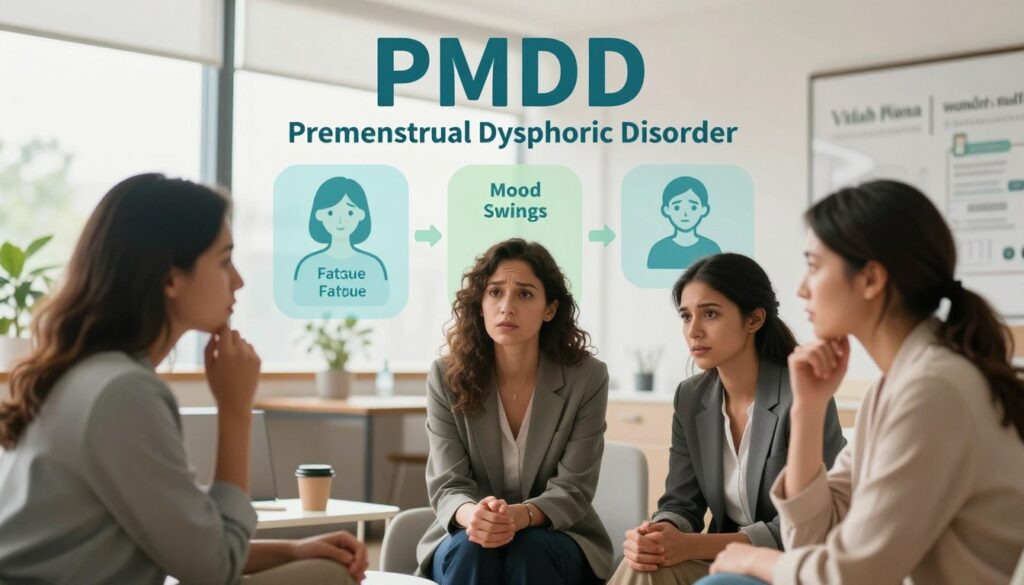
To see if you have PMDD, doctors look at specific criteria. They check if symptoms appear in the week before your period. These symptoms must include mood swings, irritability, depression, or anxiety.
They also need to see if these symptoms improve within a few days after your period starts.
Diagnostic Criteria
Doctors track symptoms over several cycles to diagnose PMDD. They might ask you to use tools like the DRSP or COPE to chart your symptoms. The criteria require symptoms to disrupt your daily life, not just be a normal part of another condition.
They also check for other medical conditions that might mimic PMDD symptoms. If your symptoms are severe and clearly linked to your cycle, a doctor might start with a provisional diagnosis sooner.
Symptom Severity
Symptoms of PMDD can vary from mild to severe. Mild symptoms are common, but severe PMDD can really impact your life. Severe symptoms include mood swings, irritability, depression, anxiety, and physical issues like bloating and breast tenderness.
PMDD often goes hand in hand with other mood disorders. It can also increase the risk of self-harm in some cases. Treating PMDD starts with accurate diagnosis and tracking symptoms daily to confirm the cycle pattern.
For a better understanding of PMDD compared to perimenopause, check out this comparison: PMDD vs perimenopause comparison.
Why PMDD Requires Treatment

Why treat pmdd when symptoms follow a monthly rhythm? The pattern hides real harm. If left unaddressed, symptoms can hurt work, study, and personal life. Early treatment brings back routine and improves quality of life.
Impact on Daily Life
PMDD can mess with your job, school, and home life. Mood swings, anger, and feeling rejected can cause fights with partners and coworkers. When symptoms are bad, you might miss work or do less than your best.
Keeping a symptom journal for two to three cycles helps prove you need help at work or school. This evidence can lead to flexible schedules or time off when needed.
For legal advice on work rights, check out this resource: PMDD legal and medical facts. It explains how to use your journal and doctor’s letters to get work accommodations or leave.
Mental Health Effects
PMDD affects more than just your mood. Many people also deal with anxiety or depression. During the worst times, thoughts of suicide and self-harm can be a big risk. So, it’s important to have a safety plan and get help quickly.
Research shows that PMDD is linked to biology. Changes in hormones and brain chemicals cause symptoms. This is why treatments like SSRIs and hormonal therapies can help. Knowing this helps doctors choose the right treatment.
Combining gynecology, psychiatry, therapy, and nutrition can improve treatment. Approaches that understand trauma and focus on the patient can also help. This way, diagnosis and treatment can happen faster and be more effective.
| Problem | How It Shows | Why Early Treatment Helps |
|---|---|---|
| Work and productivity loss | Missed shifts, reduced focus, conflicts with team | Restores functioning, supports requests for accommodations |
| Relationship strain | Heightened sensitivity, recurrent arguments, withdrawal | Reduces interpersonal conflict and improves communication |
| Co-occurring mood disorders | Worsening depression or anxiety during luteal phase | Allows combined psychiatric and reproductive care |
| Safety risks | Increased suicidal thoughts and self-harm at peak times | Enables safety planning and rapid intervention |
| Systemic barriers | Diagnostic delay, dismissal by providers, lack of support | Encourages multidisciplinary care and documentation for rights |
Medical Treatments for PMDD

When you seek medical care for PMDD, you have several options. The choice of treatment depends on your symptoms, reproductive goals, and how you react to side effects. It’s important to track your cycle for at least two months to help guide your treatment plan.
SSRIs for PMDD
SSRIs are a first-line treatment for mood and irritability in PMDD. Studies show they can help quickly, often within days, with both emotional and physical symptoms.
Common SSRIs include sertraline (Zoloft), fluoxetine (Prozac), citalopram (Celexa), and escitalopram (Lexapro). Venlafaxine (Effexor) and duloxetine (Cymbalta) are also options if SSRIs don’t work well enough.
There are different ways to take SSRIs. You can take them every day or only during the luteal phase. Luteal-phase dosing targets symptoms without constant medication. If you have ongoing depression or mood disorders, daily dosing might be better.
Common side effects of SSRIs include nausea, sleep changes, and sexual issues. If you have bipolar disorder, antidepressants can cause mood swings. You may need mood stabilizers and close monitoring from a psychiatrist.
Hormonal Treatments
Hormonal treatments aim to stabilize hormone levels that trigger PMDD symptoms. Combined oral contraceptives with drospirenone/ethinyl estradiol, like Yaz, are FDA-approved for PMDD. They can help reduce mood swings for many people.
Continuous or extended-cycle oral contraceptives can also help by reducing monthly hormone changes. For severe cases, GnRH agonists like leuprolide can suppress ovarian function. These treatments can cause menopausal symptoms and bone loss, so add-back therapy is often used.
Danazol is another option but can cause androgenic side effects and is rarely used. Be cautious with oral contraceptives if you have certain health conditions or a history of depression.
Combination Approaches
Combining treatments can target different aspects of PMDD. An SSRI plus an oral contraceptive is a common choice for those needing contraception and mood stabilization. While evidence is mixed, many find this combination helpful.
Pairing medication with psychotherapy can improve outcomes. Cognitive-behavioral therapy and skills from dialectical behavior therapy can help manage emotional reactions and interpersonal issues caused by PMDD. Use SSRIs alongside therapy when symptoms interfere with daily life.
For severe cases, a stepwise approach is often used. Start with an SSRI or OCP, then consider GnRH agonist therapy if needed. If ovarian suppression works and you’re done having children, surgical options may be discussed with your healthcare team.
Working together with your psychiatrist, therapist, and gynecologist is key to finding the right treatment plan for PMDD. Practical steps include tracking symptoms, scheduling therapy around cycle changes, and focusing on sleep, nutrition, and exercise. For more on managing overlapping conditions and timing, see cycle-aware planning.
| Treatment | Typical Benefits | Onset | Key Risks/Notes |
|---|---|---|---|
| SSRIs (sertraline, fluoxetine, citalopram, escitalopram) | Rapid reduction in mood, irritability, and physical symptoms | Days to 2 weeks | Nausea, sleep changes, sexual side effects; caution in bipolar disorder |
| Luteal-phase SSRI dosing | Targets premenstrual symptom peaks with lower total exposure | Days after start of dosing | May not address baseline depressive symptoms |
| Combined OCPs (drospirenone/ethinyl estradiol, e.g., Yaz) | Reduces hormone fluctuation–linked mood swings; provides contraception | 4–8 weeks for mood effects | Thrombotic risk, mood monitoring needed, contraindications apply |
| GnRH agonists (leuprolide) with add-back | Powerful symptom relief via ovarian suppression | Weeks | Menopausal symptoms, bone loss; reserved for refractory severe cases |
| SSRI + Psychotherapy (CBT/DBT-informed) | Broader functional gains, better emotion regulation | SSRI: days; CBT: weeks to months | Combination often improves quality of life more than monotherapy |
Natural Treatments for PMDD
Many people look for natural ways to manage PMDD symptoms without just using medicine. Making lifestyle changes can be a good start. Here are some proven strategies to try with your doctor’s help.

Nutrition Strategies
Eat whole foods like veggies, fruits, lean proteins, and grains. Cutting down on sugar, salt, caffeine, and alcohol can help.
Getting about 1,200 mg of calcium a day can help with PMDD symptoms. Vitamin D and B6 can also improve mood and physical issues. But, be careful with B6 doses over 100 mg/day to avoid nerve damage.
Magnesium and vitamin E may offer some benefits, but the evidence is limited. Chasteberry and Ginkgo biloba might help with physical symptoms. But, St. John’s Wort can interact with other medicines.
Always check if supplements interact with your medicines. Choose trusted brands. Keep track of how your diet affects your PMDD symptoms.
Exercise Approaches
Exercise can reduce mood swings, tiredness, and pain. Try activities like walking, cycling, or swimming.
Strength training and yoga can boost energy and strength. Aim for regular, moderate exercise most days. Focus on being consistent, not how hard you’re working.
Plan your workouts for the first half of your cycle if it helps. Keep a journal to see how exercise impacts your PMDD.
Stress Management
Learning new ways to handle stress can help. Cognitive behavioral therapy can reduce symptoms and improve how you handle emotions.
Techniques like DBT, mindfulness, and deep breathing can help you cope better. Good sleep habits, muscle relaxation, and problem-solving can also reduce stress.
Light therapy might help some people’s mood, but it’s not for everyone. Use a mix of stress management, nutrition, and exercise for the best results.
Combining lifestyle changes, supplements, and therapy offers many ways to manage PMDD. Keep track of how these changes work for you. Share your progress with your doctor to fine-tune your plan.
PMDD Treatment Comparison Table
This guide helps compare treatments for PMDD. It looks at how well they work, how long they last, and their side effects. It’s useful for you and your doctor to decide the best treatment.
| Treatment | Evidence Strength | Typical Onset | Common Side Effects | Practical Notes |
|---|---|---|---|---|
| SSRIs (sertraline, fluoxetine, citalopram, escitalopram) | High; multiple RCTs and meta-analyses | Days to 2 weeks | Nausea, sexual dysfunction, sleep changes | Flexible dosing (luteal or continuous); caution with bipolar disorder; considered an evidence based pmdd treatment |
| SNRIs (venlafaxine, duloxetine) | Moderate; RCTs show benefit for mood/anxiety | Days to 2 weeks | Nausea, elevated blood pressure (venlafaxine), sleep changes | Rapid mood benefit for some patients; monitor blood pressure |
| Combined oral contraceptives (drospirenone/ethinyl estradiol, e.g., Yaz) | Moderate to high for drospirenone formulations | First cycle with continued improvement | Breast tenderness, nausea, clot risk | Approved for PMDD; follow standard OCP contraindications; helpful if contraception desired |
| GnRH agonists (leuprolide) | High for refractory severe cases | Weeks | Vasomotor symptoms, bone loss | Use short-term with add-back therapy; specialist management needed |
| CBT / DBT-informed psychotherapy | Good; multiple trials for CBT, emerging DBT models | Weeks to months | None pharmacologic | Durable functional gains; requires trained therapist and active participation |
| Lifestyle & supplements (calcium, vitamin D, B6, magnesium, chasteberry) | Modest; variable quality trials | 2–3 cycles for many herbs and supplements | Usually mild; watch supplement interactions | Standardized extracts recommended; chasteberry and saffron have stronger RCT support; read an evidence guide here |
| Surgical (oophorectomy ± hysterectomy) with hormone add-back | High in carefully selected, refractory cases | Immediate menstrual cessation; long-term effects with HRT | Permanent loss of fertility; HRT risks | Consider only after failed medical ovarian suppression and when childbearing is complete |
This guide helps you and your doctor make a choice. Keep track of your symptoms to see how treatments work. Choose based on how bad your symptoms are, if you want to have kids, and your health history.
When looking at treatment options, remember to watch for side effects and how long they last. Some herbal remedies take 2–3 cycles to work, while medicines can start working sooner. Talk about combining treatments if one doesn’t work fully.
This guide aims to make it easy to compare treatments. It helps you and your doctor choose the safest and most effective option for you.
How to Build a Personalized Treatment Plan
Start by tracking your symptoms with the Daily Record of Severity of Problems (DRSP). Work with your healthcare team to create a plan that fits your needs. This plan should include doctors from different fields working together.
To make a plan that’s just right for you, match your symptoms to the right treatments. Set goals for how you want to feel and function. Keep checking in with your healthcare team to adjust your plan as needed.
Mild symptoms
Start with simple changes like regular exercise and better sleep. Try to cut down on caffeine and alcohol. Eating well and taking supplements like calcium and vitamin D can also help. Consider vitamin B6 but watch for nerve problems.
Learn some quick CBT skills and keep track of your mood. If your symptoms don’t get better, talk to your doctor about more steps.
Moderate symptoms
Look into taking an SSRI or a birth control pill that also helps with symptoms. Pair this with therapy that helps you manage your feelings. Keep up with exercise and supplements, and make sure you’re sleeping well.
Use a diary to track your symptoms. Meet with your doctor every few months to see how things are going. If you’re not getting better, try a different SSRI or adjust your dosage.
Severe symptoms
If your symptoms are very bad, get help right away. You might need to see a psychiatrist or another doctor quickly. Try a stronger SSRI or SNRI and therapy that helps you cope.
If this doesn’t work, talk about using a GnRH agonist. This is a serious step that needs careful planning. If it helps, you might consider surgery to stop your periods.
Make sure to treat any other health issues you might have. Therapy that understands trauma can be very helpful. Get your loved ones involved to help you stay on track.
Keep your treatment plan up to date. Talk to your healthcare team often to make sure you’re doing well. This will help you live a better life.
When to Seek Medical Help
If your mood or behavior changes with your cycle and affects your work, school, or relationships, you should see a doctor. Keeping a symptom journal helps figure out if you meet the DSM-5 criteria. It also shows when it’s time to get help.
Urgent signs need immediate help. If you have thoughts of suicide, a plan, recent self-harm, severe panic, psychosis, or can’t take care of yourself, call emergency services or the 988 crisis line in the U.S. right away. These situations need quick help from a psychiatrist or emergency room.
For serious but not urgent concerns, make an appointment with a doctor. Talk to your primary care doctor, OB/GYN, or a reproductive psychiatrist about pmdd. If you’re not sure who to see, start with the doctor you trust the most.
Bring important documents to your visit. Start a daily symptom journal and bring it, along with your medication and supplement list, menstrual calendar, and notes on your reproductive plans. Use a pmdd self-screening tool, like the one from Vidah Plena: pmdd self-care quiz.
Doctors will look at your menstrual history and need at least two cycles of daily charts (DRSP/COPE). They will also check for other health issues like thyroid disease or migraine. They will assess your trauma history, suicidality, medication interactions, and contraception needs to create a safe plan.
If you have recurring thoughts of suicide without a plan, you need urgent help. You might need safety planning, closer follow-up, or quick therapy referrals. For active plans or recent self-harm, go to the emergency department right away.
Complex cases need a team approach. Work with gynecology, psychiatry, psychotherapy (CBT or DBT), and nutrition or exercise specialists. Reproductive psychiatrists at places like Massachusetts General Hospital and UCSF offer specialized care when standard treatments don’t work.
Expect to have follow-up visits and changes in treatment. Doctors will watch for side effects of medications and update your safety plan if needed. If symptoms last across cycles or affect your daily life, talk about long-term management options and specialist referrals.
| Situation | Action to Take | Who to See |
|---|---|---|
| Suicidal thoughts with plan or recent self-harm | Call 988 or go to the emergency department immediately | Emergency services, inpatient psychiatry |
| Recurrent suicidal ideation without a plan | Urgent outpatient assessment and safety planning | Mental health clinic, psychiatrist |
| Severe functional impairment during luteal phase | Schedule prompt outpatient evaluation; bring symptom log | Primary care, OB/GYN, reproductive psychiatrist |
| Suspected comorbid mood or bipolar disorder | Specialist evaluation and medication review | Psychiatrist, reproductive psychiatrist |
| Routine concerns about diagnosis or treatment choices | Start prospective daily charting and bring data to appointment | Primary care, OB/GYN, therapist |
Evidence Summary
This summary reviews the latest pmdd research. It aims to guide both doctors and patients in making informed decisions. It focuses on key studies and areas needing more research in reproductive psychiatry.
Studies show SSRIs are a top choice for treating PMDD. They help reduce mood swings and other symptoms. Fluoxetine, sertraline, paroxetine, and escitalopram are the most effective, based on research evidence based pmdd treatment.
Hormonal treatments get mixed reviews. Some birth control pills are supported by studies. But, other options like GnRH agonists and danazol can help but have side effects.
Psychotherapy is also backed by research. Cognitive behavioral therapy can help as much as medication for some. Newer approaches like DBT-informed and trauma-sensitive models show promise, though more research is needed.
People often use supplements and lifestyle changes with their treatment. Calcium is the most proven to help. Other supplements and dietary changes may also help manage symptoms diet and inflammation evidence.
Research suggests PMDD is linked to hormone sensitivity. Changes in hormone levels and brain function play a big role. Studies also show brain activity changes that help us understand PMDD better.
But, there are big gaps in the research. Many studies mix PMDD and PMS, and we need more long-term data. There’s a lack of studies on adolescents and some supplements or DBT-specific treatments.
What does this mean for treatment? Use the best evidence to tailor care. Monitor how well treatments work and talk openly about risks and benefits. A mix of medication, hormones, therapy, and lifestyle changes offers the best approach.
| Intervention | Strength of RCT Evidence | Typical Benefits | Key Limitations |
|---|---|---|---|
| SSRIs (fluoxetine, sertraline, paroxetine, escitalopram) | High | Rapid reduction in mood, irritability, and functional impairment | Variable dosing strategies; long-term maintenance data limited |
| Combined OCPs (drospirenone/EE; continuous regimens) | Moderate | Symptom reduction for some patients; contraceptive benefit | Heterogeneous trial results; not effective for all formulations |
| GnRH agonists / ovarian suppression | Moderate | Marked symptom reduction in refractory cases | Significant side effects; reserve for severe, refractory PMDD |
| CBT and psychotherapy | Moderate | Improves mood and coping; durable skills-based gains | Access and variable protocol quality; fewer head-to-head RCTs |
| Calcium, vitamin D, magnesium, herbal supplements | Low to Moderate | Symptom reduction in some trials; adjunctive support | Mixed results; small samples and inconsistent dosing |
| Dietary and anti-inflammatory approaches | Emerging | May lower inflammatory markers and improve mood | Limited PMDD-specific RCTs; often adjunctive evidence |
Final Thoughts
PMDD is a treatable condition based on biology. By tracking symptoms and creating a personal plan, you can lessen distress. Use tools like the DRSP or COPE to track symptoms for two to three cycles before deciding on treatment.
Your plan should mix SSRIs, hormonal treatments, therapy, lifestyle changes, and supplements. Talk to your doctor or OB/GYN first. For more severe symptoms, consider a specialist in reproductive psychiatry or a therapist trained in CBT/DBT.
Think about your fertility goals and the side effects of treatments. Also, consider any other health conditions and your personal values. Start supportive habits like regular exercise, good sleep, and less caffeine or alcohol. If you feel suicidal or symptoms are severe, get help right away.
This guide is reviewed by Dr. Helloyze Ferreira Ancelmo (CRM-GO 31293). It focuses on making decisions together and regular check-ups. For more information, check out Vidah Plena on PMDD, supplements, nutrition, hormones, and women’s mental health. Use provider directories and tools to create a lasting, evidence-based care plan.
FAQ
What is PMDD and how is it different from normal premenstrual symptoms?
PMDD is a mood disorder that affects women before their period. It causes severe emotional and physical symptoms. Unlike regular premenstrual symptoms, PMDD makes it hard to function and requires specific criteria to be diagnosed.
How common is PMDD and when does it usually start?
PMDD affects about 3–8% of menstruating women in the U.S. It often starts in the twenties but can begin in adolescence. If not treated, it may get worse over time.
What causes PMDD?
PMDD is caused by a heightened sensitivity to hormonal changes, mainly progesterone. This sensitivity affects the brain’s serotonin and GABA levels, leading to symptoms. It’s not about abnormal hormone levels but how sensitive you are to changes.
What are the major risk factors for PMDD?
Risk factors include a history of mood or anxiety disorders, family history, and exposure to stress or trauma. Mood sensitivity during hormonal changes also increases the risk.
How is PMDD diagnosed?
Diagnosis involves tracking symptoms daily for two cycles using tools like the Daily Record of Severity of Problems (DRSP). You must meet specific criteria, including having at least one core mood symptom. It’s important to rule out other conditions that might mimic PMDD.
What are the most effective evidence-based treatments for PMDD?
Effective treatments include SSRIs and certain birth control pills, like Yaz. Cognitive behavioral therapy (CBT) is also helpful. For severe cases, treatments like ovarian suppression or surgery might be considered.
How do SSRIs work for PMDD and how should they be dosed?
SSRIs work by balancing serotonin levels in the brain. They can start working quickly, often in days. You can take them every day or only during the luteal phase, depending on your symptoms.
Are SNRIs effective for PMDD?
Yes, SNRIs like venlafaxine and duloxetine can help with mood and anxiety symptoms. They are a good option if SSRIs don’t work or are not tolerated.
What hormonal treatments help PMDD and what are the risks?
Drospirenone-containing birth control pills, like Yaz, are approved for PMDD. They can reduce symptoms. Other hormonal treatments may also help. But, they can increase the risk of blood clots and other health issues.
When is ovarian suppression or surgery considered?
Ovarian suppression or surgery is considered for severe PMDD that doesn’t respond to other treatments. These options are usually considered when you’ve finished having children. They require careful consideration of risks and benefits.
What role does psychotherapy play in PMDD care?
Psychotherapy, like CBT, can help manage PMDD symptoms. It’s often used alongside medication. It’s also a good option for those who prefer not to take medication.
Which lifestyle changes and supplements might help PMDD?
Lifestyle changes like regular exercise and a balanced diet can help. Taking calcium and vitamin D is also recommended. Some supplements, like vitamin B6, may help with mood. But, always talk to your doctor before taking any supplements.
How do you choose between an SSRI and an oral contraceptive?
Choosing between an SSRI and birth control depends on your symptoms and what you want. SSRIs can help with emotional symptoms quickly. Birth control pills might be better if you also want to prevent pregnancy.
Can intermittent (luteal-phase) SSRI dosing reduce side effects?
Taking SSRIs only during the luteal phase might reduce side effects. But, it’s not the best option if you have ongoing depression or anxiety symptoms.
How should you track symptoms to confirm diagnosis and monitor treatment?
Use tools like the Daily Record of Severity of Problems (DRSP) to track symptoms. Do this for at least two cycles to confirm PMDD. Keep tracking during treatment to see how it’s working.
What urgent signs indicate you need immediate care?
If you have thoughts of suicide, are planning to harm yourself, or are severely impaired, seek help right away. Call emergency services or a crisis line if you’re in danger.
Who should you see first for suspected PMDD?
Start with your primary care doctor or OB/GYN. For complex cases, see a reproductive psychiatrist or a therapist trained in CBT/DBT. A team approach often works best.
What should you bring to an appointment about PMDD?
Bring symptom tracking printouts, a menstrual calendar, and a list of medications and supplements. Share your reproductive plans, medical history, and any questions you have. Mention any trauma or mental health conditions.
How long does it take to know if treatment is working?
SSRIs can start working in days to weeks. You might see big changes in one to three cycles. Hormonal treatments may take longer to show results. Psychotherapy takes time to work, but it’s worth it.
Are there special safety concerns when prescribing SSRIs for PMDD?
Be careful with SSRIs, as they can cause mood swings, nausea, and sexual problems. Talk about these risks with your doctor. If you’re taking other medications or supplements, be aware of possible interactions.
What is the evidence for supplements like chasteberry, magnesium, or vitamin E?
The evidence for supplements is mixed. Chasteberry might help with some symptoms. Magnesium and vitamin E may have some benefits. But, always check with your doctor before taking any supplements.
How do comorbid conditions affect treatment choice?
If you have other health conditions, like depression or anxiety, your treatment plan will change. Your doctor will consider these conditions when choosing a treatment. They will also think about your overall health and any risks.
What are realistic expectations for treatment outcomes?
Many women see a big improvement in symptoms with the right treatment. It’s important to talk about what to expect and to track your progress. This way, you can adjust your treatment plan as needed.
How do you build a personalized PMDD treatment plan?
Creating a treatment plan involves considering your symptoms, goals, and health history. Start with lifestyle changes and supplements if symptoms are mild. For more severe symptoms, consider medication and therapy. Always work with your doctor to find the best plan for you.
Where can you find more resources and specialist care?
Check Vidah Plena for more information on PMDD, supplements, and women’s health. If you need specialized care, ask your doctor for a referral to a reproductive psychiatrist or a therapist.
Who reviewed this guidance?
This FAQ and guide were reviewed by Dr. Helloyze Ferreira Ancelmo, CRM-GO 31293. They ensure the information is based on the latest research and is helpful for women in the U.S. looking for PMDD treatment.