

Ever felt really bloated and tired before your period? Or maybe you feel so overwhelmed, tearful, or irritable that it messes with your work and relationships? You’re not alone. Many people wonder if these feelings are just normal or something more serious.
The difference between pmdd and pms is not just about how bad the symptoms are. PMS can cause physical symptoms and mild mood changes for up to 75–80% of people who menstruate. But PMDD is different. It’s a cyclical mood disorder with severe symptoms and clear impact on daily life, affecting about 3–8% of people.
Understanding this difference is important for your health. PMDD is linked to changes in the brain during the menstrual cycle. It affects how the brain responds to hormones and can lead to severe mood swings. This is why PMDD can be as debilitating as major depression and even lead to suicidal thoughts.
In this article, you’ll learn about the clinical, neurobiological, and treatment differences between menstrual mood disorders. This will help you know when you need special care. Dr. Helloyze Ferreira Ancelmo reviewed the content to ensure it’s based on the latest evidence and practical advice for women’s health.
Key Takeaways
- PMDD vs PMS: PMDD is a distinct mood disorder with severe cyclical emotional symptoms; PMS is more common and often dominated by physical complaints.
- Prevalence: PMS affects up to 75–80% of menstruating people; PMDD affects about 3–8%.
- Neurobiology: PMDD involves abnormal brain responses to normal hormonal shifts and has identifiable serotonergic and GABAergic links.
- Clinical impact: PMDD can disrupt work, relationships, and daily functioning and may require psychiatric-level treatment.
- What you’ll learn next: how to spot diagnostic criteria, differences in emotional and physical symptoms, and evidence-based treatment options for PMDD vs PMS.
Quick Answer
Wondering if your monthly struggles are just PMS or something more? A quick answer is this: PMS symptoms are common. They include physical issues and mild mood changes that you can handle with lifestyle tweaks.
PMDD, on the other hand, is a serious condition. It’s a DSM-5 depressive disorder with mainly psychiatric symptoms right before your period. Symptoms of PMDD are intense, like severe mood swings, irritability, anxiety, or depression. These symptoms can really disrupt your work or personal life.
To diagnose PMDD, you need at least five symptoms, with one being a core emotional issue. You also need to track your symptoms daily for two cycles. PMS, by contrast, doesn’t have strict psychiatric criteria. It’s usually identified by looking back at physical and emotional patterns.
Treatment varies based on the diagnosis. For PMS symptoms, try changing your diet, exercising, taking calcium, and using behavioral strategies. For PMDD, proven treatments include SSRIs, certain birth control pills, GnRH agonists, and cognitive behavioral therapy.
If your feelings are really severe, predictable, and affect your daily life, it might be PMDD. In that case, start tracking your symptoms daily and see a doctor. They can help you find the right treatment.
Key Takeaways
Having a clear list of pmdd vs pms key takeaways is essential. It helps when talking to your doctor and planning your care. PMDD is a mood disorder listed in the DSM-5, with strong emotional symptoms in the luteal phase. PMS, on the other hand, is more about physical symptoms and has milder mood changes.
Start by tracking your symptoms every day for two cycles. This helps confirm patterns. Prospective charting is key to telling PMDD apart from other conditions. Knowing the difference is vital for the right diagnosis and treatment.
Treatment starts with simple steps. First, try lifestyle changes, exercise, and supplements like calcium and vitamin B6. If needed, add cognitive behavioral therapy. For PMDD, SSRIs are often effective, given continuously or in the luteal phase. Hormonal suppression can also help, depending on your case.
Always watch for signs of safety issues. If you have thoughts of suicide or severe impairment, seek help right away. Your doctor will also check for other conditions like anxiety or bipolar disorder before making a plan.
Use tools like Clue or Flo, or a paper diary to track your symptoms. These records are the best way to summarize your menstrual mood disorders for your doctor.
| Topic | PMDD | PMS |
|---|---|---|
| Prevalence | Less common, confirmed cases around 1.6–8% | Very common; many people experience symptoms |
| Primary symptoms | Marked mood swings, irritability, depression, anxiety | Bloating, breast tenderness, headaches, mild mood change |
| Timing | Luteal-phase onset with clear remission after menses | Variable, often before menses but milder and less consistent |
| Diagnostic method | Prospective daily ratings for ≥2 cycles (DRSP) | Clinical history; prospective tracking helps |
| Biology | Sensitivity to normal luteal hormones; altered serotonin/GABA response | Sensitivity to hormonal changes with fewer neurochemical markers |
| Treatment | SSRIs, CBT, hormonal suppression, luteal strategies | Lifestyle, supplements, symptomatic relief |
| Risk during transition | May persist until menopause; can worsen in perimenopause | Symptoms often change as cycles become irregular in perimenopause |
For more on PMDD vs perimenopause, check out this comparison guide. It’s a great resource to deepen your understanding of menstrual mood disorders.
Keeping a simple chart of your symptoms can help your team. It makes it clear what you’re dealing with and helps plan better treatment.
What Is PMS?
Premenstrual syndrome (PMS) is a mix of physical and emotional changes that happen in the luteal phase of your cycle. These symptoms start after ovulation and get better once your period begins. Doctors don’t have specific criteria for PMS, so they look at your symptoms and how they change over time.

PMS can make you feel bloated, have tender breasts, headaches, and muscle pain. You might also notice changes in your appetite or crave certain foods. Emotional symptoms include feeling irritable, tearful, tired, and having trouble sleeping.
Some people with PMS have severe symptoms like intense cramps or breast pain. But these symptoms don’t always mean you have a mental health disorder. To diagnose PMDD, your symptoms must affect your daily life and mood.
Most people with PMS have symptoms that are not too severe. These symptoms can make you feel uncomfortable and less productive. But they usually don’t stop you from doing your job, going to school, or being with your loved ones. Simple changes in your lifestyle, diet, and exercise can help a lot.
Other health issues can make you feel like you have menstrual mood disorders. Problems like thyroid issues, perimenopause, anxiety, or depression can cause similar symptoms. It’s important to track your symptoms over time to figure out what’s going on.
For example, a U.S. office worker might feel bloated, tired, and a bit moody before her period. But she can keep up with her job and family. This is often a sign of PMS, not PMDD. Knowing the difference helps you get the right treatment and manage your symptoms better.
What Is PMDD?
Premenstrual dysphoric disorder, or PMDD, is a serious mood condition listed in the DSM-5. It causes emotional, cognitive, and physical changes that start in the luteal phase. These changes ease after menses starts.
These menstrual mood disorders are more intense than regular premenstrual changes. They disrupt daily life more.

To get a diagnosis, you need to track your symptoms daily. This helps tell if you have PMDD or not. The main difference between PMDD and PMS is how severe the symptoms are and how much they affect your life.
Here are the key criteria for diagnosing PMDD. Use this guide when talking to your doctor about your symptoms.
Diagnostic Criteria
The DSM-5 says you need at least five symptoms in the week before your period starts. These symptoms should get better quickly after your period starts. They should not be there much after your period ends.
One main symptom is needed: mood swings, irritability, depression, or anxiety. You might also feel less interested in things, have trouble concentrating, feel tired, or have changes in appetite or sleep. Physical symptoms like breast tenderness or bloating can also happen.
These symptoms must happen in most of your cycles for at least a year. They should cause a lot of distress or make it hard to function.
Doctors usually ask you to track your symptoms every day. They might use the Daily Record of Severity of Problems. This helps confirm when symptoms happen and rule out other conditions.
Functional Impairment
PMDD can really affect your work, school, family life, and relationships. You might miss work, have trouble focusing, or get into fights with family and friends. It can be as bad as major depression.
Some people even think about suicide during the luteal phase. If you have these thoughts, call emergency services or a mental health professional right away. Tests like thyroid function and a full psychiatric evaluation help find other causes. No blood test can confirm PMDD.
Knowing the difference between PMDD and PMS helps you get the right care. If your symptoms match PMDD criteria, you’ll need treatment from a psychiatrist or gynecologist.
| Feature | PMS | PMDD |
|---|---|---|
| Severity | Mild to moderate, manageable | Severe, causes marked impairment |
| Timing | Often in luteal phase, variable | Final week before menses, clears after menses |
| Required Symptoms | No single required affective symptom | At least one core affective symptom plus four others |
| Diagnosis | Clinical history | Prospective daily tracking (DRSP) across two cycles |
| Functional Impact | Minor interference | Marked disruption to work, relationships, and self-care |
| Differential Considerations | Lifestyle, stress, medical conditions | Rule out PME, mood disorders, thyroid dysfunction |
PMDD vs PMS Comparison Table
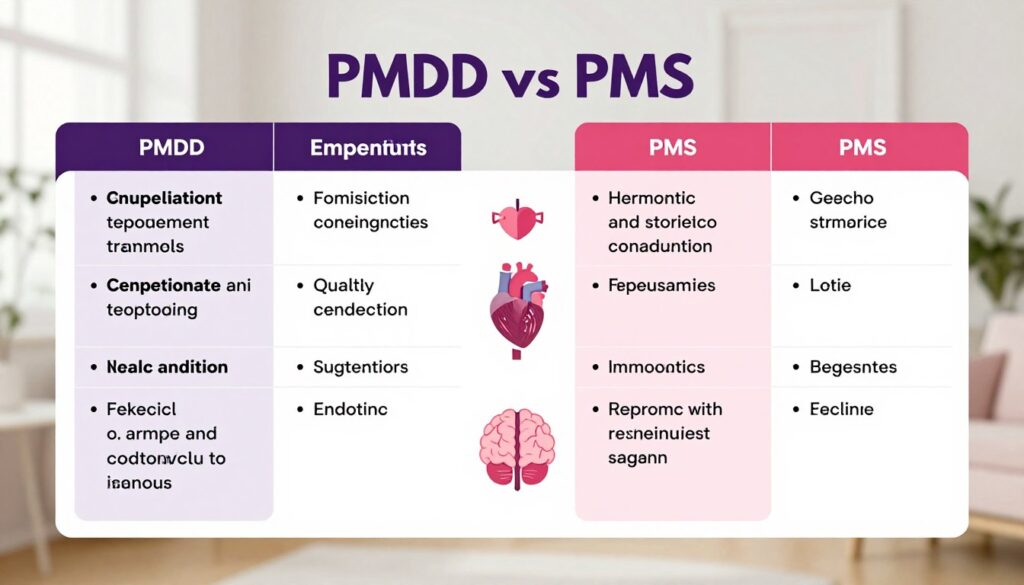
Here’s a quick guide to the main differences between PMDD and PMS. The table shows how common each is, what symptoms are most common, and how they affect daily life. It also covers the biology behind them and treatment options.
| Domain | PMS | PMDD |
|---|---|---|
| Prevalence | Up to about 75–80% of menstruating people report some PMS signs. | Approximately 3–8% of people meet criteria for PMDD in most studies. |
| Main symptom focus | Predominantly physical complaints such as bloating, breast tenderness, and cramps with mild mood changes. | Predominantly psychiatric and mood symptoms that dominate the clinical picture. |
| Core affective symptoms | Not required for diagnosis; mood changes may be present but are typically milder. | At least one core affective symptom required: mood swings, irritability, depressed mood, or anxiety. |
| Diagnostic criteria | No formal DSM-5 criteria; clinical diagnosis based on history and pattern of symptoms. | DSM-5 criteria require ≥5 symptoms, with prospective symptom tracking (DRSP) for ≥2 cycles to confirm timing and severity. |
| Prospective tracking | Helpful for clarity when symptoms are unclear, but not mandatory. | Required for diagnostic certainty; prospective daily ratings are standard practice. |
| Functional impact | Usually mild to moderate interference with routine activities; work and relationships often remain intact. | Marked impairment can occur, with disruption comparable to major depressive disorder in some cases. |
| Neurobiology | Less well defined; a mix of hormonal and lifestyle factors is implicated. | Sensitivity to normal hormonal fluctuations, altered serotonergic and GABAergic responses, genetic markers (ESC/E(Z)), and changed amygdala–prefrontal activity. |
| Treatments | Lifestyle measures, exercise, sleep hygiene, and supplements such as calcium 1,200 mg daily can reduce symptoms. | First-line treatments include SSRIs (luteal or continuous), hormonal suppression (drospirone-containing OCPs, GnRH agonists), and CBT; lifestyle help is supportive but often insufficient alone. |
| Clinical utility | Helps you manage common cyclic complaints and mild mood shifts. | Guides need for specialist care, targeted pharmacotherapy, and structured monitoring of pmdd symptoms. |
Use this pmdd vs pms comparison table when you need a fast, evidence-based snapshot. If you notice severe pms symptoms or clear, recurrent mood changes, track your symptoms and discuss pmdd vs pms with a clinician. This will help shape treatment choices suited to your needs.
Emotional Differences
Emotional symptoms help tell conditions apart. Look at timing, intensity, and how they affect you. PMDD causes big mood swings that start before your period and stop after. PMS mood swings are milder and don’t disrupt as much.
Anxiety
PMDD can make you feel very tense, worried, or panicked. These feelings can happen fast and affect your work or relationships.
PMS might make you feel a bit nervous or worried more often. But it usually doesn’t stop you from doing things you need to do.
Depression
PMDD can make you feel very sad, hopeless, and lose interest in things. Some people even think about suicide. It’s important to track your feelings every day to see if it’s PMDD.
PMS might make you feel a bit down or tearful. But it doesn’t usually stop you from doing things. If you feel down for a long time, it might be something else.
Anger and Irritability
PMDD often makes people feel very angry or irritable. You might argue a lot or get angry quickly. These feelings can really get in the way of your life.
PMS can make you feel a bit more irritable. But it’s usually not as bad or lasts as long. If you get very angry every month, it might be PMDD.
| Feature | PMDD | PMS |
|---|---|---|
| Symptom timing | Consistent luteal-phase onset and remission after menses | Variable timing; milder premenstrual worsening |
| Anxiety | Marked, often disabling; rapid onset (pmdd symptoms anxiety) | Mild nervousness; rarely disabling |
| Depressive symptoms | Severe sadness, hopelessness, possible suicidality | Transient tearfulness or low mood |
| Anger/irritability | Pronounced, can cause serious interpersonal conflict | Moderate increase, less disruptive |
| Functional impact | Often significant impairment | Usually minimal to mild impact |
| Recommended action | Prospective tracking and clinical evaluation for PMDD | Symptom monitoring and lifestyle support for pms mood; seek care if severe pms symptoms appear |
Physical Differences
Menstrual mood disorders share some physical signs, but timing and impact differ. Symptoms like bloating, breast tenderness, headaches, and muscle aches are common in both. Yet, if these symptoms are severe and disrupt daily life, it’s likely PMDD.
Tracking symptoms across cycles helps determine if they are cyclical or persistent. This can clarify the nature of physical complaints.
Fatigue
PMS symptoms fatigue often feels like tiredness that improves with rest and better nutrition. This fatigue usually goes away once your period starts.
In PMDD, fatigue is more severe and linked to emotional and cognitive symptoms. It can make it hard to focus, work, and maintain relationships. Factors like sleep loss, neuroendocrine sensitivity, and HPA-axis changes can worsen PMDD fatigue.
Sleep Disturbances
Mild sleep changes are common in PMS, like brief insomnia or hypersomnia that goes away after your period. These changes rarely dominate the clinical picture.
PMDD symptoms sleep disturbances are more severe. Insomnia or excessive sleep can be among the main symptoms, leading to memory lapses and mood swings. Tracking sleep and using behavioral strategies are important parts of treatment. New tools that monitor sleep and heart rate variability can help predict when symptoms will worsen.
For more information on distinguishing between cyclical patterns and broader hormonal shifts during midlife, see this resource on perimenopause and related timing differences: PMDD and perimenopause: how to tell the.
| Feature | PMS | PMDD |
|---|---|---|
| Onset and timing | Symptoms appear in luteal phase and ease with menses | Predictable luteal-phase onset with remission after menstruation |
| Fatigue severity | Often mild to moderate, responsive to lifestyle change | Marked fatigue that impairs daily function and cognition |
| Sleep issues | Occasional insomnia or hypersomnia that resolves | Significant insomnia or hypersomnia included among core symptoms |
| Contribution to diagnosis | Physical symptoms support diagnosis but do not define it | Physical symptoms must accompany severe affective symptoms for diagnosis |
| Usual management | Lifestyle, nutrition, OTC remedies, targeted symptom care | Stepped plan including sleep hygiene, CBT, hormonal or pharmacologic options |
Treatment Differences
When it comes to PMDD and PMS, treatment plans differ. For PMS, simple steps like exercise and diet changes can help. These steps reduce inflammation and balance energy levels.
PMDD, on the other hand, needs a more focused approach. Doctors often start with SSRIs to manage symptoms. These medications can start working quickly, sometimes in just a few days.
Hormonal treatments are also key for PMDD. Certain birth control pills or continuous hormone therapy can help stabilize hormone levels. For severe cases, doctors might consider GnRH agonists with add-back therapy.
Cognitive behavioral therapy is helpful for both PMDD and PMS. It teaches coping skills and emotional control, which is vital during the premenstrual phase.
Supplements and exercise are also used to support treatment. These can help manage symptoms but are not a replacement for medical treatment in PMDD.
When PMDD and other conditions overlap, treatment becomes more tailored. Doctors might use a combination of treatments or schedule therapy sessions to match symptom timing. Keeping a symptom journal helps guide treatment choices.
For a deeper look at how PMDD and OCD might overlap, check out this discussion: pmdd and ocd connection.
| Approach | PMS Typical Use | PMDD Typical Use | Notes |
|---|---|---|---|
| Lifestyle and diet | Primary line; pms home remedies like exercise and calcium | Adjunct to medical care | Low risk; supports overall wellbeing |
| SSRIs | Rarely needed | First-line; pmdd treatments SSRIs, continuous or luteal dosing | Rapid effect for many; monitor side effects |
| Hormonal therapy | Occasional for severe cycles | Common for moderate to severe cases; OCPs or GnRH options | Requires gynecologic follow-up |
| Psychotherapy | Supportive; stress management | Evidence-based CBT tailored to cycle timing | Useful alone for mild cases, combined for PMDD |
| Advanced interventions | Not typical | GnRH agonists, specialty referrals, rare surgical options | Reserved for refractory, severe presentations |
When to Seek Medical Help
If your mood and behavior change each month, it might affect your work, school, or relationships. Consider getting a professional evaluation. Keep a symptom log for two cycles and bring it to your appointment. This will help show the pattern and timing of your symptoms.
Call 988 in the U.S. or local emergency services if you have suicidal thoughts or urges to harm others. Look out for signs like panic attacks, severe confusion, or not being able to take care of yourself during the luteal phase.
If you miss work, can’t take care of dependents, or your daily functioning drops sharply before your period, see a doctor quickly. Use a PMDD screening tool and share your symptom logs with a healthcare provider. This will help decide what to do next.
Make an appointment if premenstrual symptoms regularly disrupt your relationships, job, or daily tasks. If changes in lifestyle, sleep, exercise, or over-the-counter treatments don’t help, you might need to be evaluated for PMDD.
Before your visit, prepare by bringing symptom tracking logs, a list of medications, and your medical and psychiatric history. You should also bring any family history of mood disorders. Expect tests to rule out other medical causes and referrals to psychiatry or gynecology if needed.
Ask your healthcare provider about treatment options like SSRIs, hormonal strategies, or cognitive behavioral therapy. They can also guide you on when to seek help for PMDD or PMDD vs PMS questions. They will explain the diagnostic steps and safety planning.
For urgent help with suicidal thoughts without a plan, seek fast follow-up with a mental health clinic or crisis team. For severe panic, psychosis, or inability to function, go to the emergency department for possible inpatient care and safety monitoring.
If you want tools to track symptoms or a quick readiness check, try a trusted screening link for daily symptom logs and resources on women’s health PMDD at PMDD self-care quiz. This can help you and your clinician make informed decisions about severe PMS symptoms medical help and long-term care.
| Situation | When to Act | Who to Contact |
|---|---|---|
| Suicidal thoughts or self-harm | Immediate | 988 / Emergency Department |
| Marked monthly functional decline | Prompt outpatient visit | OB/GYN, Primary Care, Psychiatrist |
| Persistent emotional symptoms despite self-care | Routine appointment | Reproductive mental health specialist |
| Recurrent severe anxiety, rage, or depression premenstrually | Evaluate for PMDD | Gynecologist or Psychiatrist |
Evidence Summary
This summary focuses on PMDD, covering its prevalence, diagnosis, and treatments. It shows how tracking symptoms daily is key to diagnosing PMDD. This method helps distinguish PMDD from other premenstrual issues.
For a proper diagnosis, doctors need to track symptoms daily for at least two cycles. This method reduces recall bias and helps pinpoint symptoms before menses. It’s a common approach in research and guidelines.
The DSM-5 classifies PMDD as a distinct disorder. Studies suggest it affects 3–8% of menstruating women. Yet, many more women experience milder symptoms that affect their daily lives.
Research suggests PMDD is linked to how the brain reacts to hormonal changes, not abnormal hormone levels. Studies on serotonin and GABA help explain why SSRIs work quickly. The role of the amygdala and prefrontal circuits is also well-supported.
Genetic studies show PMDD has a strong hereditary component. Certain genes affect how cells respond to sex hormones. Early life stress and sensory sensitivity may also play a role in symptoms.
Several treatments are effective for PMDD. SSRIs can be taken continuously or just during the luteal phase. Some birth control pills and GnRH agonists also help, though they have side effects.
Non-drug treatments are also beneficial. Cognitive behavioral therapy and supplements like calcium and vitamin B6 can help. Exercise and diet changes also offer support, mainly for PMS.
Despite progress, research gaps remain. The variety in symptoms and global diagnostic standards make it hard to compare treatments. More studies are needed to understand the impact of trauma and sensory factors.
Doctors should track symptoms daily and consider perimenstrual worsening to improve diagnosis. They should offer evidence-based treatments that fit each patient’s needs and preferences.
For a detailed review on PMDD and treatments, see this summary: PMDD clinical review.
| Topic | Key Finding | Evidence Strength |
|---|---|---|
| Prevalence | PMDD: ~3–8%; clinically significant premenstrual symptoms more common | Moderate (epidemiologic studies) |
| Diagnosis | DRSP prospective tracking ≥2 cycles required to confirm timing | High (consensus guidelines) |
| Neurobiology | Abnormal CNS response to normal hormones; serotonergic and GABAergic mechanisms | Moderate to high (neuroimaging and pharmacologic studies) |
| Genetics & Vulnerability | Heritability high; steroid-response gene links; trauma and SPS implicated | Emerging (genetic and observational studies) |
| Pharmacotherapy | SSRIs effective (continuous or luteal dosing); select OCPs and GnRH agonists for some | High (randomized trials, meta-analyses) |
| Psychotherapy & Lifestyle | Adapted CBT, calcium, B6, exercise reduce symptoms as adjuncts | Moderate (clinical trials, meta-analyses) |
| Research Needs | Long-term comparative trials, trauma‑informed studies, global diagnostic harmonization | High priority (consensus among reviewers) |
Final Thoughts
Bottom line: if your premenstrual symptoms are predictable, intense, and disrupt work, relationships, or daily tasks, they may be PMDD. This is important because PMDD needs specific treatment, not just lifestyle changes.
Practical next steps: start tracking your symptoms daily using the Daily Record of Severity of Problems (DRSP) or a validated app. Do this for at least two cycles and note how symptoms affect your daily life. If you have severe mood symptoms or suicidal thoughts, seek immediate medical attention.
Talk to a clinician experienced in reproductive mental health about your tracked data. They can explore SSRIs, hormonal options, cognitive behavioral therapy, and supplements like calcium or vitamin B6. This approach recognizes PMDD as a real and treatable condition, aiming to improve your quality of life.
For ongoing support, look into treatment options, supplements, and hormonal health. Also, learn about nutrition for menstrual health and women’s mental health menstrual mood disorders. This will help you create a detailed plan. This advice has been reviewed by Dr. Helloyze Ferreira Ancelmo (CRM-GO 31293).
FAQ
What is the main difference between PMDD and PMS?
PMS is common and has physical symptoms and mild mood changes. These symptoms go away with menstruation. PMDD is a serious mood disorder with severe mood swings, irritability, and depression. It requires daily tracking to diagnose.
How common are PMS and PMDD?
PMS affects up to 75–80% of menstruating people. PMDD affects about 3–8% of menstruating individuals, with 5–8% being the most common estimate.
Which symptoms are considered core affective symptoms for PMDD?
PMDD requires at least one core symptom like mood swings or depression. It also needs five symptoms in the luteal week, including these and physical or cognitive symptoms.
Can severe physical PMS symptoms be diagnosed as PMDD?
No. Physical symptoms alone do not qualify for PMDD. PMDD needs severe mood symptoms that cause a lot of trouble and follow a specific timing pattern.
How is PMDD diagnosed clinically?
Diagnosis follows DSM-5 criteria. Symptoms must include at least one core affective symptom. They must also be present in most cycles for a year and cause significant distress.
Prospective daily symptom recording is needed for at least two cycles. This confirms the timing and rules out other conditions.
What is premenstrual exacerbation (PME) and how is it different from PMDD?
PME is when an underlying psychiatric disorder gets worse during the luteal phase. It doesn’t have the symptom-free follicular phase of PMDD. Distinguishing PME from PMDD is key because treatment differs.
What neurobiological factors differentiate PMDD from PMS?
PMDD shows abnormal brain responses to normal hormonal changes. It involves altered serotonin and GABA responses, and different brain activity. Genetic factors and trauma may increase risk.
What treatments are recommended for PMS versus PMDD?
PMS often responds to lifestyle changes and symptomatic measures. PMDD usually needs psychiatric and gynecologic treatments. SSRIs and hormonal suppression are first-line treatments.
Lifestyle measures can help with PMDD but are not enough alone.
Can SSRIs be used only in the luteal phase for PMDD?
Yes. SSRIs are first-line for PMDD. They can be given continuously or only in the luteal phase. PMDD often shows quick response to SSRIs.
When should I seek immediate medical attention?
Seek emergency care for suicidal thoughts, self-harm urges, or severe mood changes. Also, get urgent help if symptoms severely impair daily functioning.
When should I make a routine appointment about premenstrual symptoms?
Make an appointment if symptoms regularly interfere with life. If lifestyle measures and OTC remedies fail, or if symptoms are mostly emotional and resolve with menses, seek evaluation for PMDD.
What should I bring to a clinical appointment about possible PMDD?
Bring two cycles of daily symptom tracking and a list of current medications. Include medical and psychiatric history, trauma history, and family history. Expect evaluation to rule out medical causes and consider specialist referrals.
Are there effective nonpharmacologic treatments for PMDD?
Yes. Cycle-targeted CBT reduces symptoms. Lifestyle interventions like exercise and sleep hygiene are helpful for PMS. For trauma-related cases, trauma-informed psychotherapy can be beneficial.
What are the stepped-care options for treatment-resistant PMDD?
Stepped care starts with lifestyle and CBT, then moves to pharmacologic treatments. For refractory cases, GnRH agonists with add-back therapy may be used. Rarely, surgical oophorectomy is considered for extreme cases.
How does fatigue and sleep disturbance differ between PMS and PMDD?
Both have fatigue and sleep problems. In PMS, they are mild to moderate and respond to lifestyle changes. In PMDD, fatigue is severe and affects thinking. Sleep changes are also severe and part of the DSM-5 criteria.
Could thyroid disease or perimenopause cause similar symptoms?
Yes. Conditions like thyroid dysfunction or perimenopause can mimic premenstrual symptoms. Laboratory testing and careful clinical assessment help differentiate PMS, PMDD, PME, and other causes.
What should I do now if I suspect PMDD?
Start daily symptom tracking for at least two cycles. Note the timing and impact. Consult a clinician experienced in reproductive mental health if symptoms are severe or interfere with life. Seek immediate care if suicidal thoughts or severe impairment occur.
Who reviewed this content?
Content reviewed by Dr. Helloyze Ferreira Ancelmo (CRM-GO 31293).